
CATEGORY: PHOTOGRAPHS
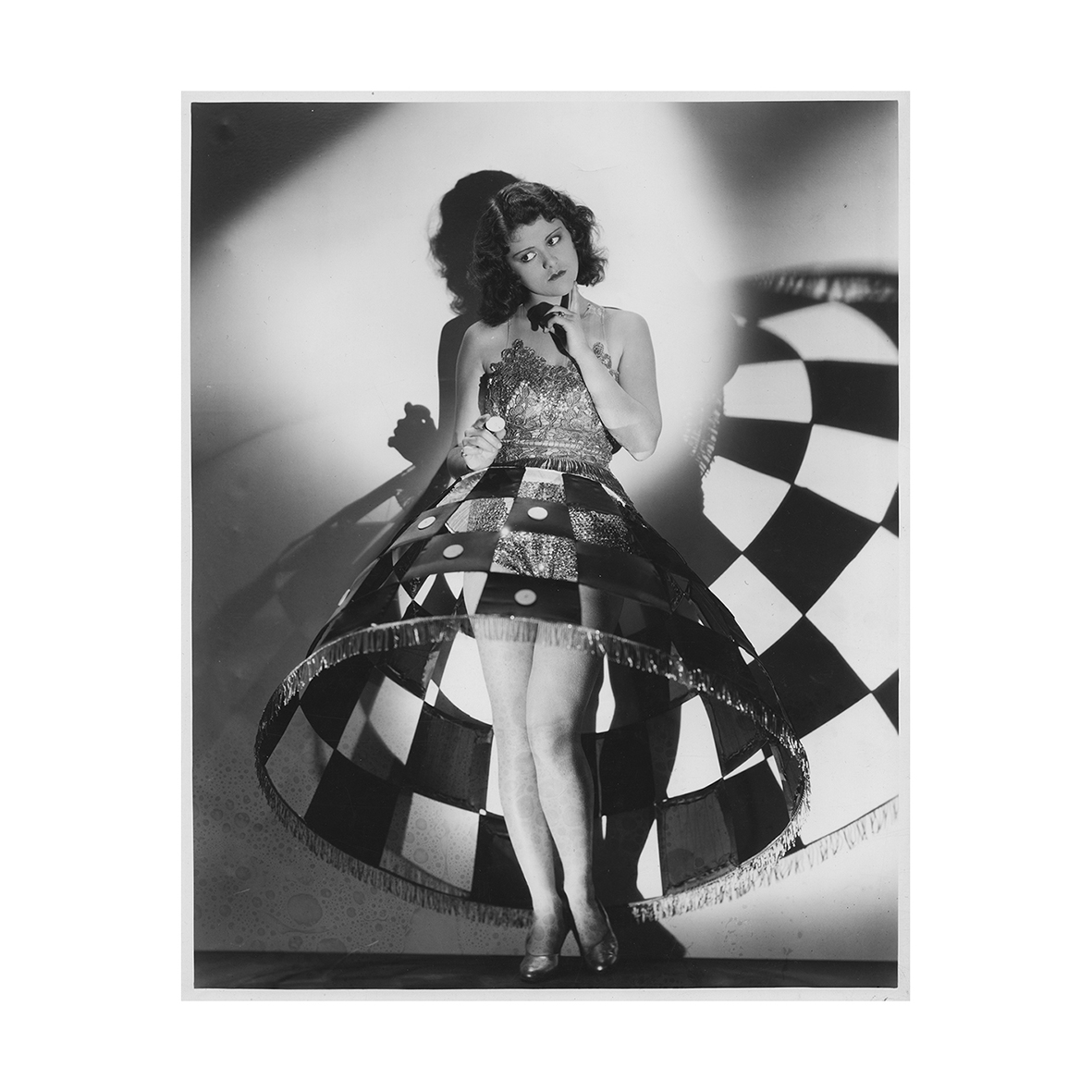
Vintage print (photo montage) + the book "Masters of Starlight", in which a similar photograph is pictured. The book has some cut-out pages, but the pages about Richee and especially the one on page 87 (Checker Board Girl) is complete.
Creator:
Gene Robert Richee (1896-1972)
Object:
Photograph, gelatin silver print
Country:
U.S.A.
Design period:
1930
Production period:
1930
Identifying marks:
Stamped, dated and titled on verso
Style:
Fine art, portraits
Condition:
In good vintage condition. The lower quart of the print has some "bubble formed spots", probably from saving it in a non-acid-free sleeve. Despite this visible imperfection, the print is really beautiful and overall in very good condition for a 94 years old print! Please note that prints may have small scratches, spots, folds or discolourations due to their age. Please see the scan, as it is part of the item description.
Material:
Gelatin silver print on baryta photographic paper
Colour:
Black & White
Dimensions:
W 20.2 x H 25.5 cm
Biography
Eugene Robert Richee (1896 Denver Colorado - 1972). As one of “The distinguished dozen” (dr. David Shields, University of South Carolina), Richee found recognition as an artist long time after his death. Although he was included in the book and exhibition “Masters of Starlight” (Los Angeles County Museum of Art 1988), little is known about “Paramount’s finest photographer in the 1920s”. Richee was prolific and specialized in textural contrast, complex patterns of shadow and clothing, and arabesque linear elements in his pictures. The Museum of Modern Art undercut his reputation by their sly habit of reproducing photos with a credit line that named only MOMA’s Film Archive. Unfortunately, Richee’s name is less well-known than it ought to be, but his pictures speak for themselves. He invented fantasy images whose sheen and seduction became the ultimate Hollywood trademark.
Eugene Robert Richee headed Paramount’s portrait studio from its inception and he worked with a talented coterie of associates including William Walling and Don English. Richee remains the least examined among the top Hollywood photographers although he was one of the finest – one needs to look no further than his sensational portraits of Paramount stars Anna Mae Wong , Clara Bow , Louise Brooks and Marlene Dietrich as evidence. Even a tireless researcher like Kobal had difficulty uncovering biographical information about Richee and it is only after Kobal’s death that a few details have emerged about Richee’s life including his 1896 birth in Colorado. He started at Paramount in 1921 and stayed for twenty years after which he left he left to take a job at Warner Brothers. Richee died in 1972 just before Kobal began exploring seriously the careers of Hollywood portrait photographers. Like Ruth Harriet Louise, Richee left scant biographical information behind but, again like Louise, he left a corpus of extraordinary work that may be seen as emblematic of the best of Hollywood photography. Richee was an inventive photographer and when working with starlets he sometimes incorporated props made of plastic, glass or even mirrors, giving his prints a sparkling reflective quality. Portraits of the top stars always had a sheen that was consistent with the studio’s image of smart sophistication. When he photographed Clara Bow, the studio’s number one sexpot took on a polished veneer. Richee has the distinction of being the first photographer to record Veronica Lake and her distinctive blond locks in his portraits for I Wanted Wings (1940), the film that brought her worldwide fame. Perhaps Richee’s most famous work is a 1928 portrait of Louise Brooks wearing a long string of pearls. Few photos capture better the zeitgeist of the Roaring ’20s. Simplicity is the hallmark of this photograph along with a masterful composition. Brooks stands, face in profile and wearing a simple long sleeved black dress, against a black background, her face, hands and pearls alone illuminated. Her bob with its razor sharp line across the white skin of her jaw was widely copied and became one of the last century’s most potent fashion statements. Brooks’s career had intermittent highs and lows but she was one of Hollywood’s great portrait subjects and was never better served than by Richee. At the top of his game and for reasons unknown, Richee left Paramount in 1941 to go to Warner Brothers and later worked for MGM.
Lillian Roth (1910 Boston USA - 1980 Westchester County New York USA)
Singer and actress Lillian Roth was six years old when she became Educational Pictures’ trademark, symbolized by a living statue holding a lamp of knowledge. In 1917 she made her Broadway debut in “The Inner Man”. Her motion picture debut came in 1918 in “Pershing’s Crusaders”. Soon the young actress signed a seven-year contract with Paramount Pictures. Her sensational autobiography “I’ll Cry Tomorrow” (1954) was made into a hit film starring Susan Hayward, who was nominated for an Academy Award. The book became a bestseller worldwide (seven million copies in twenty languages). In 1958, Roth published a second book, “Beyond My Worth”. In 1962 she was featured in the Broadway musical “I Can Get It for You Wholesale” (301 performances with Barbra Streisand). Her personal life was overshadowed by her addiction to alcohol. Roth was married seven times. The inscription on her grave reads: “As bad as it was, it was good.”
Vintage print (photo montage) + the book "Masters of Starlight", in which a similar photograph is pictured. The book has some cut-out pages, but the pages about Richee and especially the one on page 87 (Checker Board Girl) is complete.
Creator:
Gene Robert Richee (1896-1972)
Object:
Photograph, gelatin silver print
Country:
U.S.A.
Design period:
1930
Production period:
1930
Identifying marks:
Stamped, dated and titled on verso
Style:
Fine art, portraits
Condition:
In good vintage condition. The lower quart of the print has some "bubble formed spots", probably from saving it in a non-acid-free sleeve. Despite this visible imperfection, the print is really beautiful and overall in very good condition for a 94 years old print! Please note that prints may have small scratches, spots, folds or discolourations due to their age. Please see the scan, as it is part of the item description.
Material:
Gelatin silver print on baryta photographic paper
Colour:
Black & White
Dimensions:
W 20.2 x H 25.5 cm
Biography
Eugene Robert Richee (1896 Denver Colorado - 1972). As one of “The distinguished dozen” (dr. David Shields, University of South Carolina), Richee found recognition as an artist long time after his death. Although he was included in the book and exhibition “Masters of Starlight” (Los Angeles County Museum of Art 1988), little is known about “Paramount’s finest photographer in the 1920s”. Richee was prolific and specialized in textural contrast, complex patterns of shadow and clothing, and arabesque linear elements in his pictures. The Museum of Modern Art undercut his reputation by their sly habit of reproducing photos with a credit line that named only MOMA’s Film Archive. Unfortunately, Richee’s name is less well-known than it ought to be, but his pictures speak for themselves. He invented fantasy images whose sheen and seduction became the ultimate Hollywood trademark.
Eugene Robert Richee headed Paramount’s portrait studio from its inception and he worked with a talented coterie of associates including William Walling and Don English. Richee remains the least examined among the top Hollywood photographers although he was one of the finest – one needs to look no further than his sensational portraits of Paramount stars Anna Mae Wong , Clara Bow , Louise Brooks and Marlene Dietrich as evidence. Even a tireless researcher like Kobal had difficulty uncovering biographical information about Richee and it is only after Kobal’s death that a few details have emerged about Richee’s life including his 1896 birth in Colorado. He started at Paramount in 1921 and stayed for twenty years after which he left he left to take a job at Warner Brothers. Richee died in 1972 just before Kobal began exploring seriously the careers of Hollywood portrait photographers. Like Ruth Harriet Louise, Richee left scant biographical information behind but, again like Louise, he left a corpus of extraordinary work that may be seen as emblematic of the best of Hollywood photography. Richee was an inventive photographer and when working with starlets he sometimes incorporated props made of plastic, glass or even mirrors, giving his prints a sparkling reflective quality. Portraits of the top stars always had a sheen that was consistent with the studio’s image of smart sophistication. When he photographed Clara Bow, the studio’s number one sexpot took on a polished veneer. Richee has the distinction of being the first photographer to record Veronica Lake and her distinctive blond locks in his portraits for I Wanted Wings (1940), the film that brought her worldwide fame. Perhaps Richee’s most famous work is a 1928 portrait of Louise Brooks wearing a long string of pearls. Few photos capture better the zeitgeist of the Roaring ’20s. Simplicity is the hallmark of this photograph along with a masterful composition. Brooks stands, face in profile and wearing a simple long sleeved black dress, against a black background, her face, hands and pearls alone illuminated. Her bob with its razor sharp line across the white skin of her jaw was widely copied and became one of the last century’s most potent fashion statements. Brooks’s career had intermittent highs and lows but she was one of Hollywood’s great portrait subjects and was never better served than by Richee. At the top of his game and for reasons unknown, Richee left Paramount in 1941 to go to Warner Brothers and later worked for MGM.
Lillian Roth (1910 Boston USA - 1980 Westchester County New York USA)
Singer and actress Lillian Roth was six years old when she became Educational Pictures’ trademark, symbolized by a living statue holding a lamp of knowledge. In 1917 she made her Broadway debut in “The Inner Man”. Her motion picture debut came in 1918 in “Pershing’s Crusaders”. Soon the young actress signed a seven-year contract with Paramount Pictures. Her sensational autobiography “I’ll Cry Tomorrow” (1954) was made into a hit film starring Susan Hayward, who was nominated for an Academy Award. The book became a bestseller worldwide (seven million copies in twenty languages). In 1958, Roth published a second book, “Beyond My Worth”. In 1962 she was featured in the Broadway musical “I Can Get It for You Wholesale” (301 performances with Barbra Streisand). Her personal life was overshadowed by her addiction to alcohol. Roth was married seven times. The inscription on her grave reads: “As bad as it was, it was good.”
GENE ROBERT RICHEE (1896-1972)
Lillian Roth, checker board girl, stamped vintage photograph, 1930
Lillian Roth, checker board girl, stamped vintage photograph, 1930

€ 600,00